文臺寶塔
1836
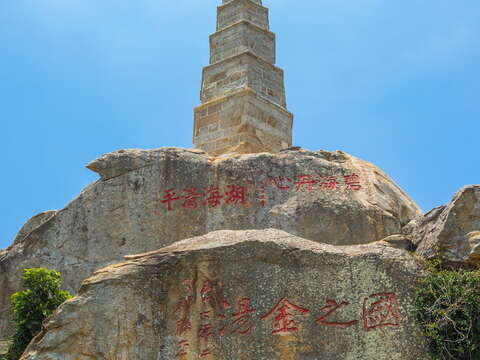
文臺寶塔建於明朝,是明太祖命「江夏侯」周德興在金門建的三座石塔之一,也是金門唯一沒有毀於戰火、未受砲彈損傷的明代石塔。
高聳的文臺寶塔,過去也作為航海的指標,塔頂有鐫字及浮刻,面向金門城方向的塔檐下,掛著一塊長條石板,橫鐫有「奎星聳照」四字,下方浮刻有「魁星踢斗」圖象,祈求文風興盛的意境明瞭,塔下的盤石有明代武官陳煇手書的「文臺寶塔」墨蹟,以及已故國畫大師張大千的「國之金湯」墨寶,相當具歷史意義,目前被列為國定古蹟。
高聳的文臺寶塔,過去也作為航海的指標,塔頂有鐫字及浮刻,面向金門城方向的塔檐下,掛著一塊長條石板,橫鐫有「奎星聳照」四字,下方浮刻有「魁星踢斗」圖象,祈求文風興盛的意境明瞭,塔下的盤石有明代武官陳煇手書的「文臺寶塔」墨蹟,以及已故國畫大師張大千的「國之金湯」墨寶,相當具歷史意義,目前被列為國定古蹟。
Wentai Pagoda was built in 1387. Due to its historic significance, it's now a national monument. One of three stone pagodas built in Kinmen under the emperor's direct order, it was the only one to escape damage from wars over the years.
You can think of this pagoda as a stone lighthouse. Its main purpose was as a landmark for sailors.
Looking up to the roof, you might spot some inscriptions and carvings. They include an image of a Chinese deity kicking a wooden box, which symbolizes Kinmen's thriving literary scene at the time.
The red engravings on the stones at the foot of the pagoda are important not only for what they say, but for who wrote them. The characters that read "Wentai Pagoda" are in the handwriting of a Ming dynasty military official named Chen Hui. The characters that translate as "The nation's golden gate" are the calligraphy of the Chinese painting master Zhang Daqian.
You can think of this pagoda as a stone lighthouse. Its main purpose was as a landmark for sailors.
Looking up to the roof, you might spot some inscriptions and carvings. They include an image of a Chinese deity kicking a wooden box, which symbolizes Kinmen's thriving literary scene at the time.
The red engravings on the stones at the foot of the pagoda are important not only for what they say, but for who wrote them. The characters that read "Wentai Pagoda" are in the handwriting of a Ming dynasty military official named Chen Hui. The characters that translate as "The nation's golden gate" are the calligraphy of the Chinese painting master Zhang Daqian.
「文台宝塔」は、明洪武20(1387)年に明太祖が江夏侯である周徳興に命じ金門に建てさせた三つの石塔の内の一つです。金門で唯一、戦火を逃れ、砲弾の損傷を受けていない明代の石塔です。
高くそびえる「文台宝塔」はかつては航海の指標でした。塔頂には文字と浮き彫りが刻まれ、金門城方向に向かう塔の廂の下には、細長い石板が掛かっています。石板には「奎星聳照」の四文字が横書きに刻まれ、下方には「魁星踢斗」の絵が浮き彫りされており、文化隆盛への祈りが示されています。塔下の盤石には明代の武官-陳煇の手による「文台宝塔」の墨跡、中国画の大家-故張大千が書き残した貴重な「国之金湯」の墨宝があります。歷史的な意義が非常に高く、現在では国定旧跡に指定されています。
高くそびえる「文台宝塔」はかつては航海の指標でした。塔頂には文字と浮き彫りが刻まれ、金門城方向に向かう塔の廂の下には、細長い石板が掛かっています。石板には「奎星聳照」の四文字が横書きに刻まれ、下方には「魁星踢斗」の絵が浮き彫りされており、文化隆盛への祈りが示されています。塔下の盤石には明代の武官-陳煇の手による「文台宝塔」の墨跡、中国画の大家-故張大千が書き残した貴重な「国之金湯」の墨宝があります。歷史的な意義が非常に高く、現在では国定旧跡に指定されています。
문대보탑은 명 홍무 20년(1387년)에 건축된 것으로 명태조가 <강하후> 주덕흥을 시켜 진먼에 건축하라고 명한 3좌의 석탑중 하나입니다. 진먼에서 전쟁의 포화에 파괴되지 않고, 포탄의 손상없이 유일하게 남아있는 명대의 석탑입니다.
높이 솟은 문대보탑은 과거 항해의 지표가 되었으며, 탑 꼭대기에는 돋을새김으로 글을 새겨넣었고, 진먼청 방향의 탑처마아래에는 길쭉한 석판을 걸어두었는데, 가로로 <규성용조(규성-문운을 담당하는 별-이 높이솟아 비추다)> 새겨져 있고, 아래에는 <괴성척두(괴성-문창제군, 중국의 신-이 북두를 차다)>의 문양을 새겨넣어 문운 흥성을 기원하였습니다. 탑 아래의 돌에는 명대 무관 진휘가 <문대보탑>이라는 수기필적, 그리고 작고한 국화대가 장대천의 <국지금탕>이라는 필적이 남아있습니다. 역사적 의미가 상당하기에 현재는 국정고적으로 지정되었습니다.
높이 솟은 문대보탑은 과거 항해의 지표가 되었으며, 탑 꼭대기에는 돋을새김으로 글을 새겨넣었고, 진먼청 방향의 탑처마아래에는 길쭉한 석판을 걸어두었는데, 가로로 <규성용조(규성-문운을 담당하는 별-이 높이솟아 비추다)> 새겨져 있고, 아래에는 <괴성척두(괴성-문창제군, 중국의 신-이 북두를 차다)>의 문양을 새겨넣어 문운 흥성을 기원하였습니다. 탑 아래의 돌에는 명대 무관 진휘가 <문대보탑>이라는 수기필적, 그리고 작고한 국화대가 장대천의 <국지금탕>이라는 필적이 남아있습니다. 역사적 의미가 상당하기에 현재는 국정고적으로 지정되었습니다.